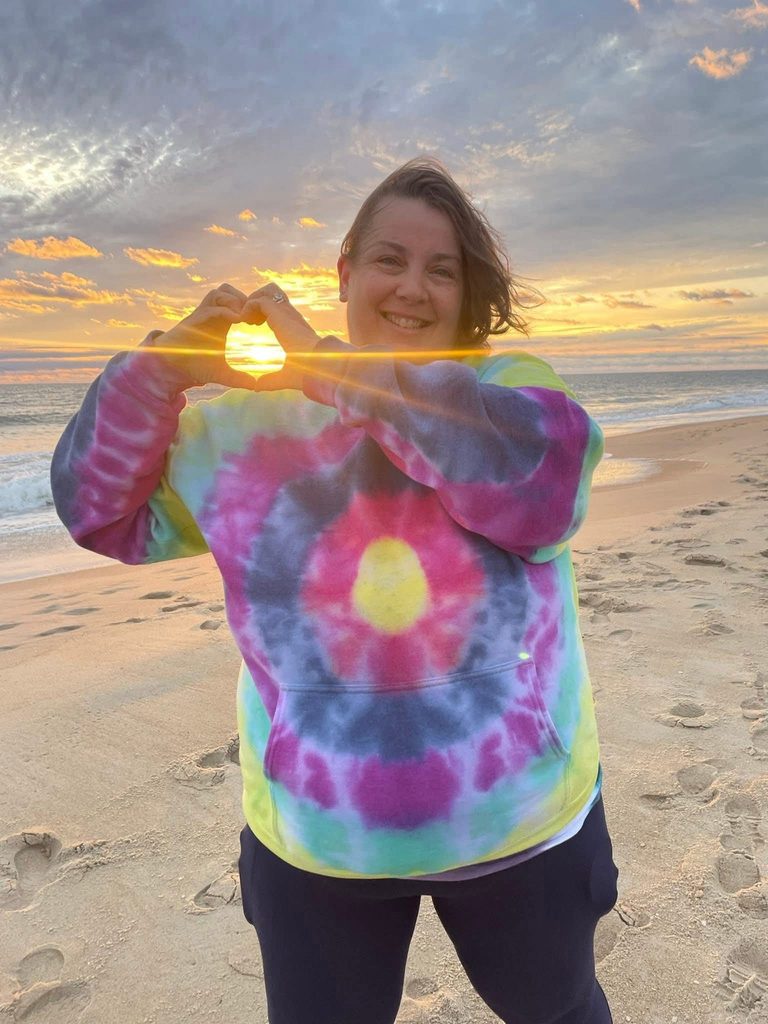

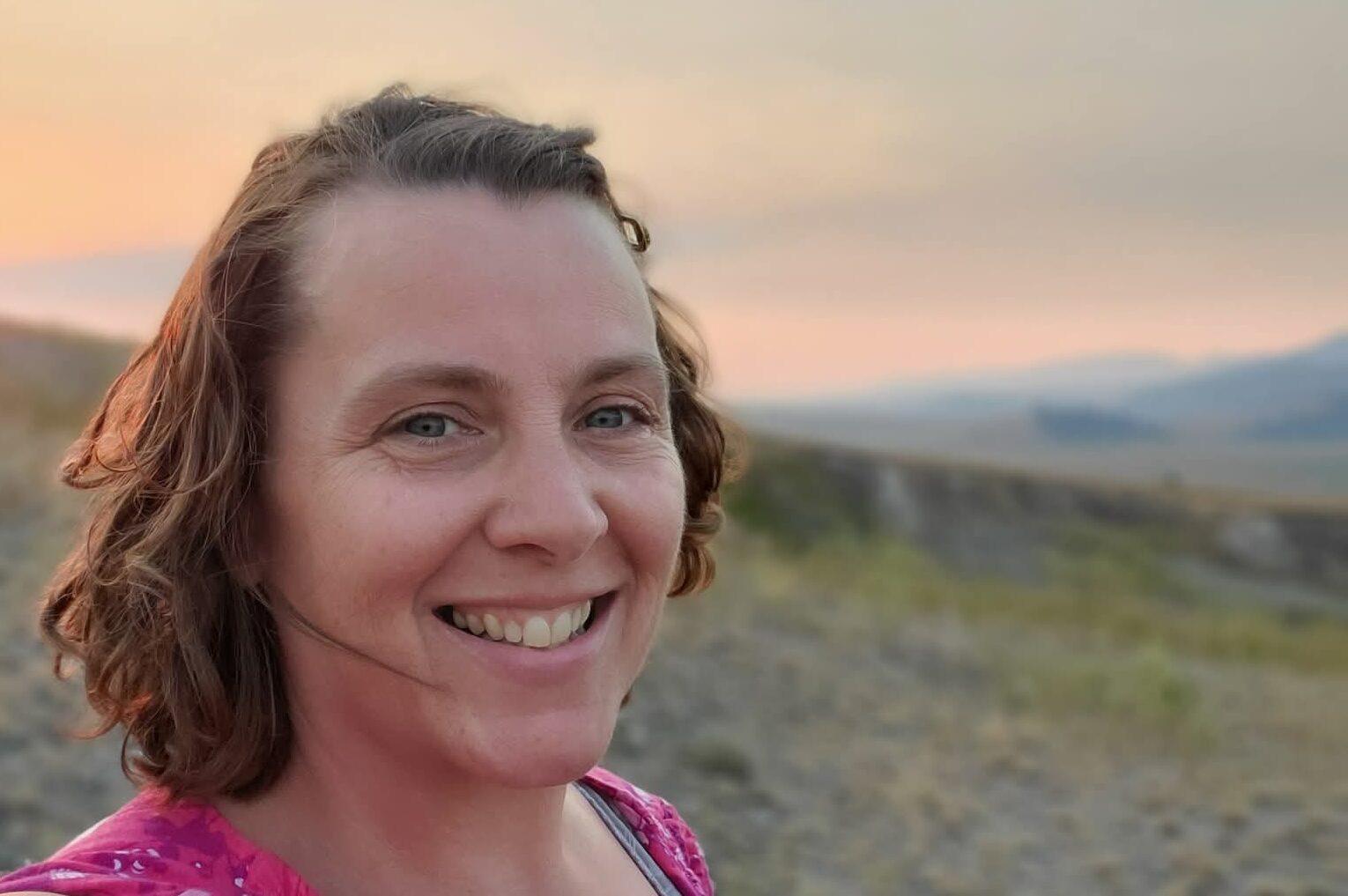
When Bridget Murphy lost her hair during frontline chemotherapy for ovarian cancer, she was surprised by how little the loss itself bothered her.
“I figured it was just hair—it’d grow back. And for me, it was a small price to pay for lifesaving treatment.”
But Bridget’s hair story isn’t really a story about what cancer took from her.
It’s about what she did with it.
Her hair had been long, fine, straight and untreated, so before chemo could take it, she decided she wanted to donate it.
She went to a salon and requested one thing before the cutting began: an extra-good scalp massage.
The stylist carefully divided her hair into sections, secured them with elastics and began cutting. Bridget expected tears.
Instead, thanks in large part to the best friend sitting beside her, there was laughter.
She mailed those sections away and remembers feeling proud that, in the middle of an incredibly frightening time, something she was losing could become something someone else could use.
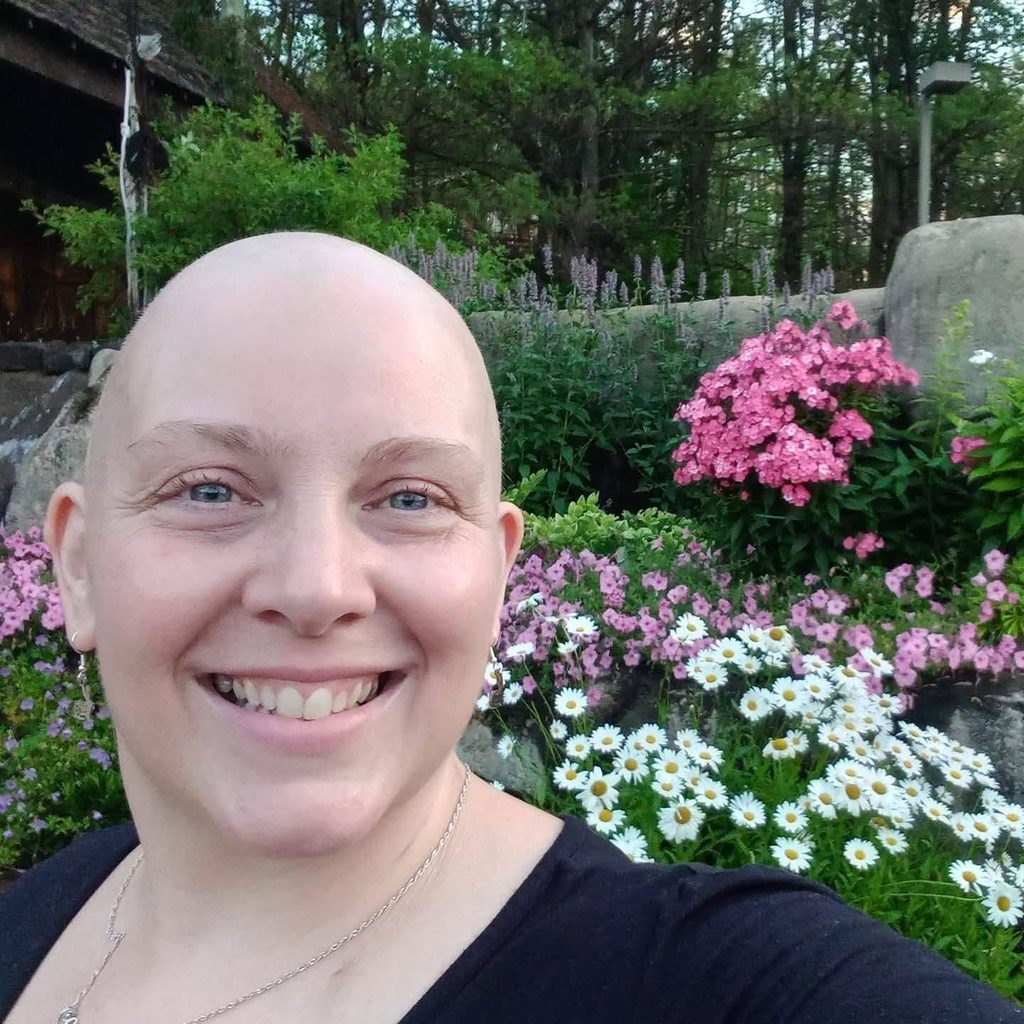
And then Bridget embraced the bald.
No wig. Scarves and beanies when she needed protection from the sun or warmth—but otherwise?
“I actually think I have a pretty good head. I rocked that chrome dome like a champion.”
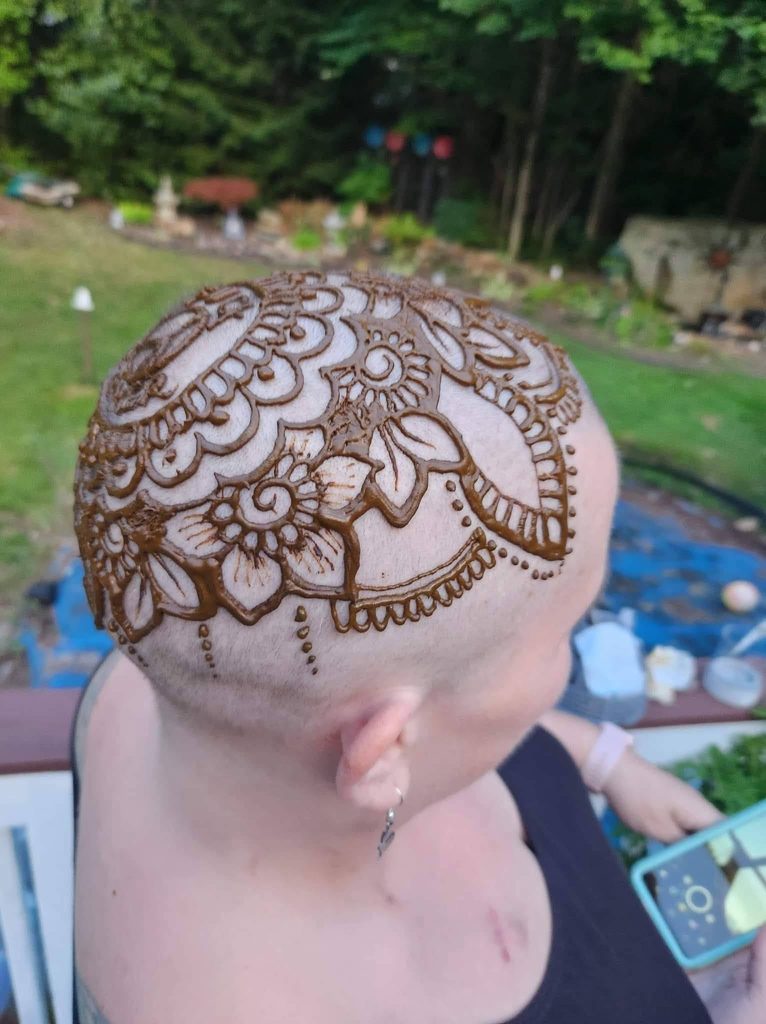
Her best friend even hired a henna artist who transformed that bald head into a beautiful henna crown.
Later, washable markers came out and friends were invited to doodle on her scalp.Later, washable markers came out and friends were invited to doodle on her scalp.
“Gotta take advantage of the canvas I was given.”
Then came the chemo curls.
Bridget loved them.
Strangers would stop her to ask what products she used to get those curls. Instead of simply accepting the compliment, she turned those moments into opportunities to talk about chemo—and about the often-silent symptoms of ovarian cancer.
But more than four years after frontline chemotherapy, her relationship with hair has changed again.
Bridget has experienced two recurrences. Her current chemotherapy drugs don’t cause hair loss.
And, strangely enough, sometimes she wishes they did.
Because the bald head that once seemed like such a small price to pay also told the world something:
I am going through cancer treatment.
Today, Bridget can look fabulous while feeling anything but fabulous.
“Right now I ‘look healthy’ while feeling like complete garbage. I think people don’t/can’t/won’t understand that I can look as fabulous as I do but still be sick.”
She says she would happily trade her hair again for some of the other side effects she experiences now.
Bridget’s story is an important reminder that there is no single way cancer looks.
Sometimes cancer looks like a bald head.
Sometimes it looks like a henna crown, a scarf or a head covered in your friends’ doodles.
Sometimes it looks like gorgeous chemo curls.
And sometimes?
It looks like Bridget. Looking fabulous while still going through something incredibly hard.
Hair—or the absence of it—can tell part of a cancer story.
But it can never tell the whole story.