

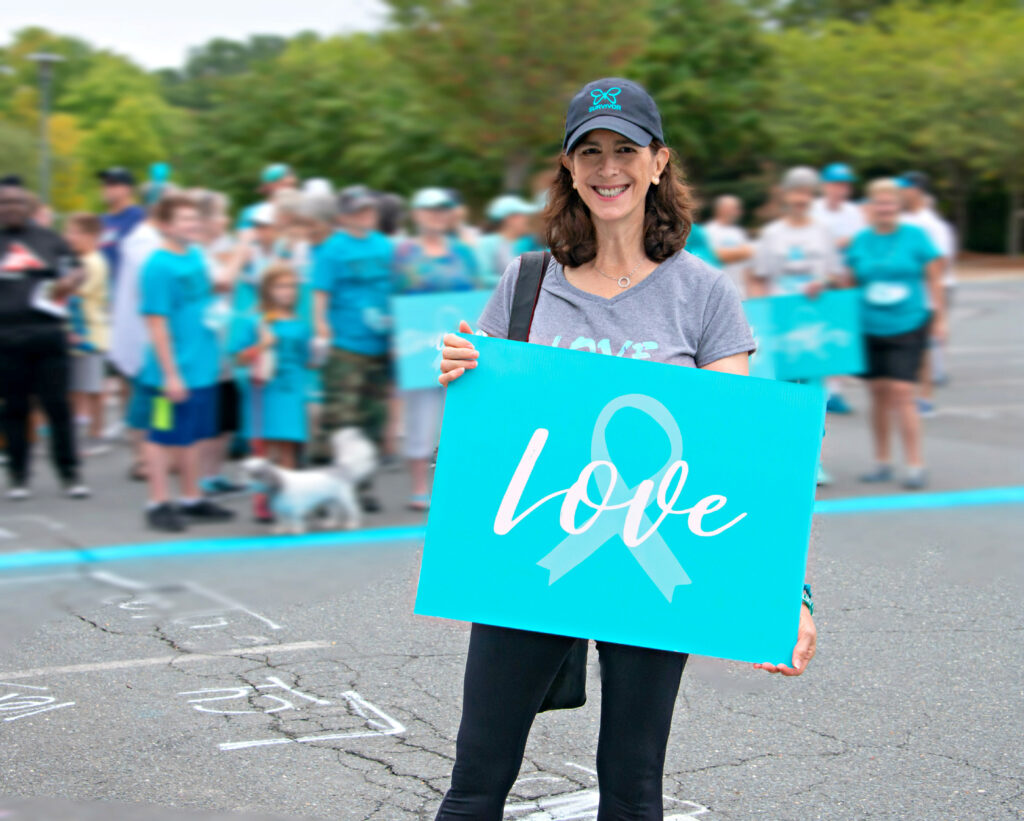
“I like to say the luck of a calendar—and an ultrasound—saved my life.”
This month, we recognize both World Ovarian Cancer Day on May 8 and National Cancer Research Month; stories like Vicky’s remind us just how life-changing awareness, research, and early action can be.
This year marks an extraordinary milestone for Vicky: 20 years as an ovarian cancer survivor.
Diagnosed with Stage IIIC ovarian cancer in her mid-40s, her journey is not only a story of resilience—it is also a powerful example of how research, genetic understanding, and proactive care continue to shape the future of gynecologic cancer outcomes.
A Life Saved by Awareness—and Timing
Vicky had always known she carried a higher risk. Her mother had experienced both ovarian and breast cancer, and while genetic testing was not yet commonly discussed, the family history was impossible to ignore.
So she stayed consistent with her care.
An annual gynecological visit.
An added ultrasound.
A commitment to paying attention.
When subtle symptoms appeared—fatigue, bloating, feeling full quickly—she initially attributed them to stress and exhaustion from work and daily life.
But timing intervened.
Her already-scheduled appointment led to additional imaging, and within days, everything changed.
“That’s where the luck of the calendar comes in… I didn’t have time to wait. I was in surgery the next morning.”
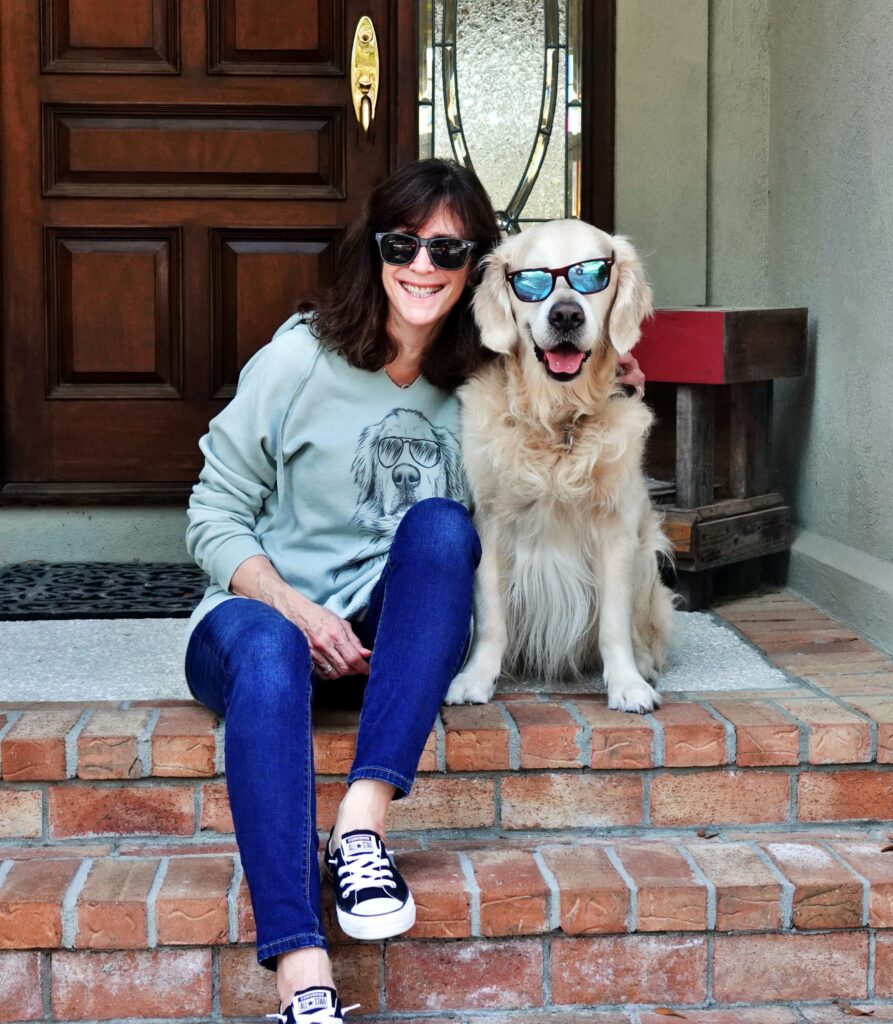
The Power of Genetic Knowledge
At the time of Vicky’s diagnosis, genetic testing was far less accessible and far less understood than it is today.
It wasn’t until after treatment that she learned she carried a BRCA mutation—something her doctors had strongly suspected based on her family history.
Today, that information can change lives.
Genetic testing now helps
- Identify hereditary cancer risk earlier
- Guide treatment decisions
- Inform family members who may also be at risk
- Open the door to preventative care and targeted therapies
For Vicky’s family, that knowledge became deeply personal.
One of her brothers tested positive for the mutation. Her niece later tested positive as well and chose preventative surgeries after completing her family.
“Knowing gives you choices.”
Why Cancer Research Matters
During treatment, Vicky underwent an aggressive protocol called intraperitoneal (IP) chemotherapy, a treatment approach that was still evolving at the time.
“I would turn like a rotisserie chicken… just trying to soak the cancer cells.”
Years later, researchers discovered something important:
Patients with BRCA mutations often respond especially well to certain therapies, including treatments similar to the one Vicky received.
That is the power of cancer research.
Research helps physicians:
- Develop more effective treatments
- Understand how genetics influence outcomes
- Improve survival rates
- Personalize care for each patient
What once felt experimental or uncertain has now become part of a more targeted, informed future for ovarian cancer patients.
The Reality of Long-Term Survivorship
Twenty years later, Vicky still speaks honestly about survivorship.
The treatment may end, but survivorship continues:
- Neuropathy
- Brain fog
- Lingering physical effects
- Emotional adjustment
- The fear and uncertainty that can follow treatment
“No one prepares you for after cancer… I felt untethered.”
But over time, survivorship also becomes something else:
Perspective. Purpose. Hope.
And for women facing ovarian cancer today, long-term survivors matter deeply.
They are proof that progress is happening.

“Every time I thought I might stop showing up… someone would hug me and say,
‘You’ve given me hope.’”
What Vicky Wants Women to Know
After two decades of survivorship, Vicky’s message is simple, powerful, and urgent:
Know your family history
Have the conversations. Ask questions. Information matters.
Understand your risk
Genetic testing can provide answers—and options.
Listen to your body
“If something feels off and lasts more than two weeks, go to the doctor.”
Don’t delay care
Early action can change outcomes.
Take care of yourself, too
Women so often prioritize everyone else first. Your health matters.
Hope Built Through Awareness and Research
Vicky’s story spans two decades of progress:
- From limited genetic understanding → to precision medicine
- From silence → to stronger survivor communities
- From uncertainty → to greater hope for future patients
Vicky’s journey reminds us why awareness and research both matter so deeply.
Because every study, every conversation, every shared story, and every early diagnosis has the power to change another woman’s future.
And because when women speak up, support one another, and advocate for research and awareness—
she wins.